

Advocacy has never been easier to execute, but never harder to make effective. Think about it: the tools are better than ever. You have precision targeting, scalable automation, and dynamic creative at your fingertips, yet despite that, the outcomes feel less certain than ever.
This contradiction is the new reality, and it’s one that advocacy practitioners cannot turn away from.
Whenever I get stuck on a problem, I’m drawn to data. I look for trends and statistics to help me make sense of what’s working and what’s not. But when I really dug into this one, I couldn’t find enough data to satisfy me. I had anecdotal stories from dozens of grassroots advocacy clients, but I didn’t have something that helped me see the full picture from action to impact.
So last year, we decided to find out for ourselves if advocacy programs were working the way we thought they were by conducting original research. We wanted to understand not just whether people take advocacy action, but what happens in the moments and days after they do. What we found reframed how we think about our work entirely.
In December 2025, we launched an online survey of 1,000 American voters – a nationally stratified sample with a margin of error of +/- 3.1 percentage points. Last month, we released some of the findings in our Future of Advocacy Report. Below, I’ve outlined what I walked through in my recent Ask ‘Bee’ Anything session on the topic, but the report provides much more detail on how we’re interpreting the data.
If you want to watch the full ABA recording to see the reveal of the data, you can access it below.
The Old Advocacy Story vs. the NEW Advocacy Story.
For years, the field has operated on a simple logic: get people to take action, and that’s a win. Write better content, reduce friction, send the email, and watch the numbers go up. If the petition got signed or the message got sent, the campaign succeeded.
That story is no longer sufficient.
AI is about to make it even less so. As output becomes abundant, belief becomes scarce. Any organization can now generate personalized, high-volume advocacy content at scale. The differentiator isn’t going to be who can produce the most – it’s going to be who has earned the most trust. This means the future of advocacy will be won through relevance, credibility, and follow-through, not volume.
Crucially, this also means that the first action isn’t the finish line. It’s the beginning. And the real gap in most advocacy programs isn’t the content that gets people to act – it’s everything that happens, or doesn’t happen, after they do.
Finding 1: Advocacy isn’t broken, but our definition of winning is.
When voters are asked to take action on a social or political issue, 76% say they actually do. That’s a remarkably high conversion rate, and it changes the diagnosis entirely. The problem is not getting people to raise their hands; the problem is what happens after they do. Right now, most organizations aren’t set up to answer that question well.
The old playbook measures success at the moment of conversion. The new reality demands we measure it months later, when we can see whether that initial action became the beginning of something durable or just another data point that quietly disappeared.
Finding 2: Action leads to curiosity, and that’s your moment of leverage.
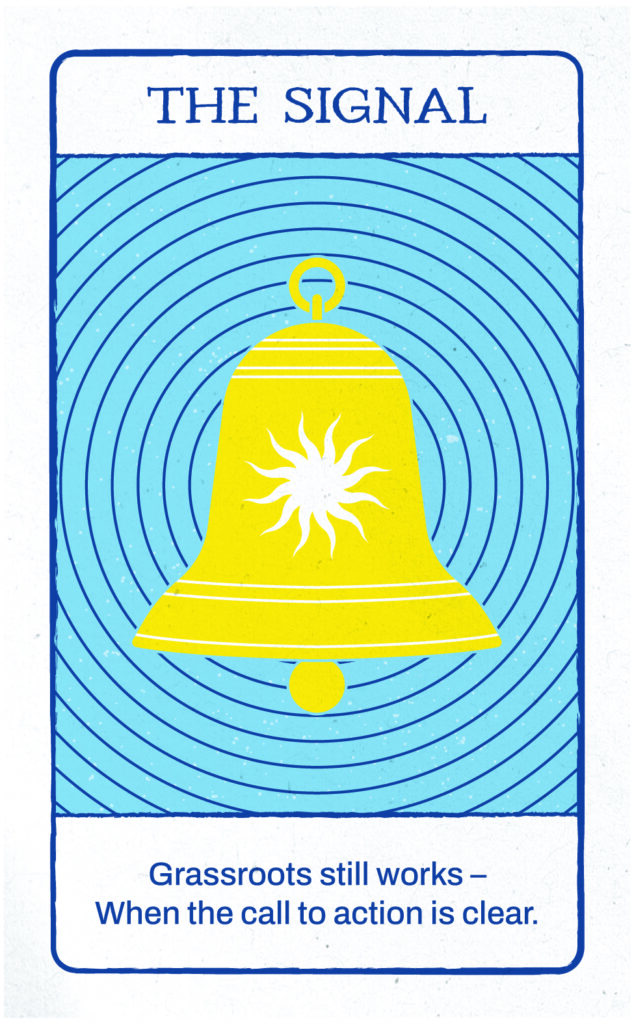
After taking action, 80% of people report that they went on to research the issue or cause further. They didn’t treat their participation as a transaction – they treated it as an entry point. The act of signing a petition or contacting an elected official triggered curiosity – meaning it’s up to us to make it easy for advocates to get answers to questions like what did I just support, why does it matter, and what comes next?
The post-action window is a spike in attention, openness, and investment. It is also the moment most programs squander by treating conversion as the end. Curiosity without guidance leads to disengagement. And when people navigate a complex, often contradictory information environment on their own – without context from the organization that activated them – that curiosity can easily calcify into skepticism.
Finding 3: Follow-up isn’t optional.
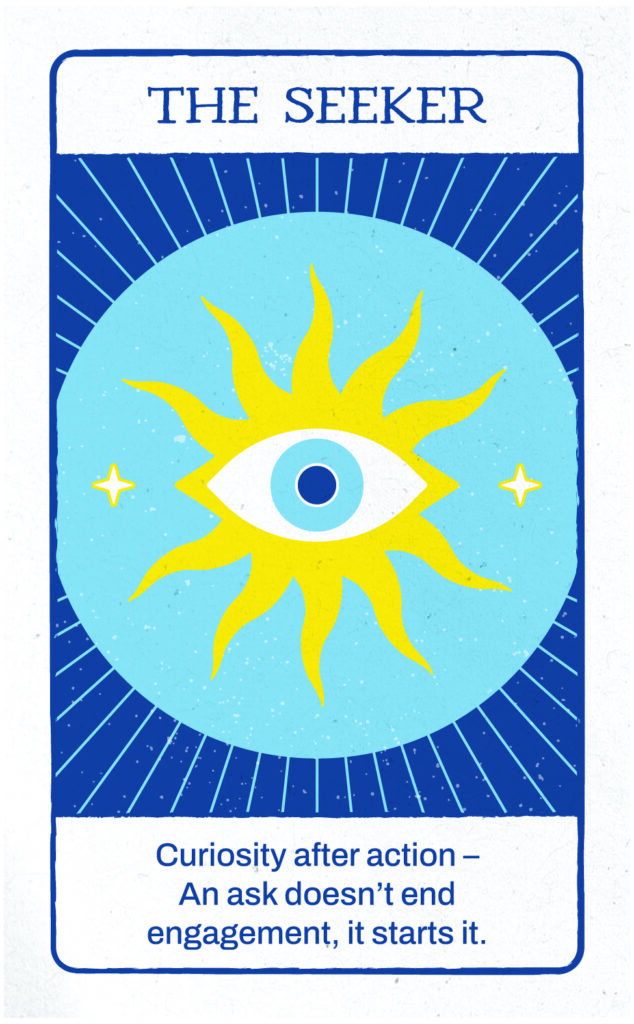
The data was explicit on this: 78% of people who took action expect to hear from the organization again, and 62% say they want some kind of follow-up. They want to know what happened, whether their action contributed to something real, and what comes next. They are not asking to be left alone; they want to be brought along!
This indicates that a “thank you for taking action” message without a next step isn’t follow-up; it’s a dead end. And each action that disappears into an organizational void trains people to treat advocacy as symbolic rather than substantive. The programs that win next will be built for post-action behavior, with clear pathways and meaningful follow-through that turns a one-time click into durable engagement.
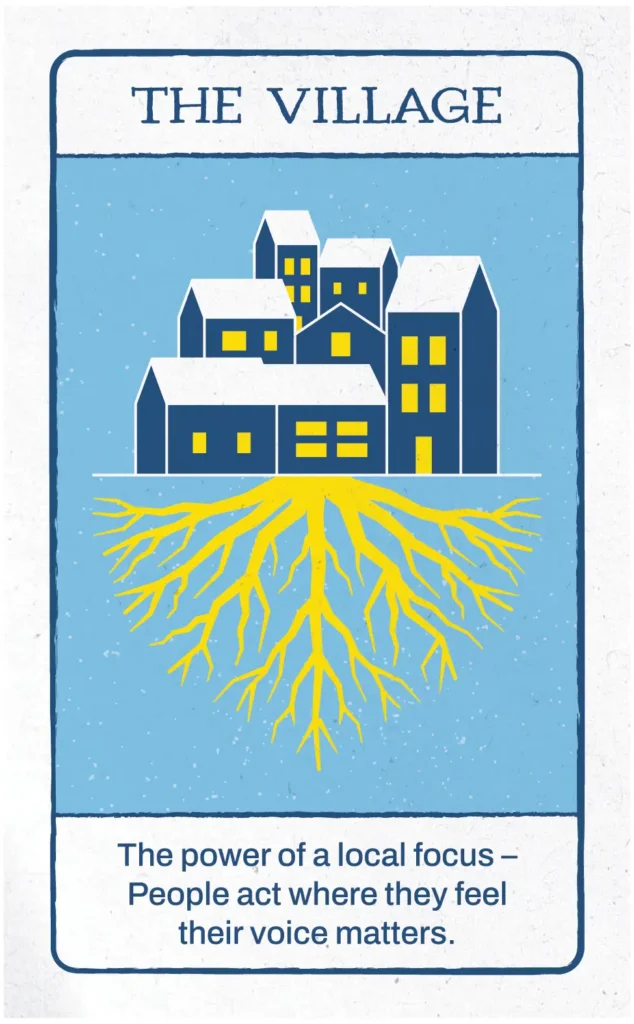
Finding 4: Local is the force multiplier.
When voters were asked directly where their voices make the biggest difference, 69% pointed to their local community. State-level engagement ranked second, and national issues ranked last, suggesting a fundamental disconnect between where advocacy programs often have to concentrate their resources and where people believe their participation creates change.
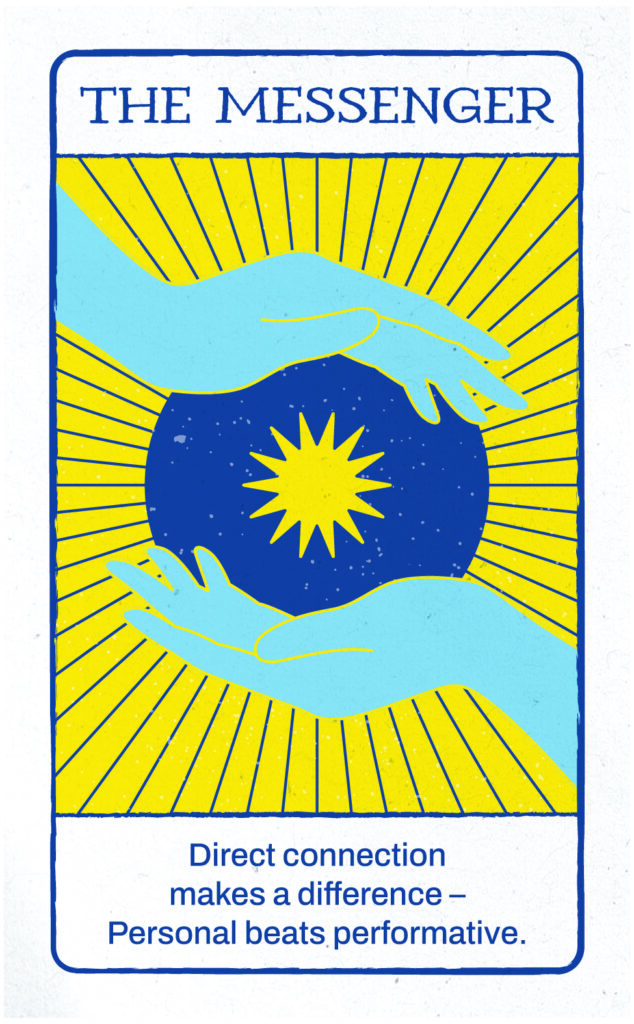
Local means more than surface-level personalization like inserting a city name or a representative’s name into an email template. True local relevance means connecting an issue to something real in someone’s community, ideally framed by a messenger they already trust, grounded in shared experience, and grounded in mutual accountability.
What This Means for How You Build Campaigns.
Start by auditing where you leak momentum after action. Do people disappear because there is no clear next step? Is your thank-you message the last thing they hear from you for weeks? Map the post-action journey with the same rigor you bring to the pre-action funnel – because that’s where campaigns are actually won or lost.
AI can help you scale content, but it cannot scale trust. The organizations that will lead in this next era are the ones that use technology to extend their reach while investing in the human elements that build lasting relationships: authentic local connections, genuine follow-through, and a commitment to treating advocates as long-term partners rather than one-time clicks. In this era, the question is not whether you can generate actions. It is whether your program is built to deserve the next one.
We’d Love to Know What More You Want to Know!
Our report, released last month, shares the research with our point of view, but there’s significantly more data behind each of these findings than we could fit into a single report. We’d love to hear what’s resonating and what other questions you’ve got!
Advocacy has always been about belief: belief that participation matters, that voices add up, that change is possible. Belief is now one of the scarcest resources in the field. The organizations that protect and cultivate it, through follow-through, through local relevance, through genuine human connection, will define what advocacy looks like next. Stay curious. We’ll be right there with you.